

Boost Your Team’s Efficiency with AI Powered Smart Scheduler
Learn how an AI Powered Smart Scheduler cuts scheduling time, reduces conflicts, and boosts productivity for teams using real metrics, examples and benefits.
AI & AUTOMATION
Key Points
AI Powered Smart Schedulers automate meeting and task scheduling using machine learning and data patterns
Manual scheduling wastes significant time, averaging nearly 5 hours per week per employee
Common issues include double bookings, email back and forth, and inconsistent calendars
AI schedulers reduce conflicts by up to 90 percent and automate most scheduling tasks
Teams save 30 to 40 percent of scheduling time and improve productivity and focus
AI driven reminders and predictions reduce no shows and improve employee satisfaction
Actionable takeaway: Evaluate your current scheduling time, pilot an AI Powered Smart Scheduler with a small team, and measure time saved and conflict reduction within the first month
What is an AI‑Powered Smart Scheduler?
An AI‑Powered Smart Scheduler is a software tool that uses artificial intelligence to automate how meetings, tasks, and work schedules are arranged. Unlike traditional calendar tools where you manually match availability, an AI scheduler analyzes patterns, conflicts, and participant preferences to suggest optimal times and automatically coordinate meetings. It leverages machine learning and data analysis to make smarter scheduling decisions without manual effort.
This shift from manual to AI‑driven scheduling turns administrative overhead into strategic time savings, especially for teams balancing multiple calendars and complex workflows.
How AI Scheduling Works
AI scheduling systems typically connect with your calendars, email, and collaboration platforms. They use algorithms to:
Identify availability across participants
Resolve conflicts before they arise
Propose meeting times based on priorities and constraints
Send reminders and adjust schedules as needed
These schedulers use predictive analytics and pattern recognition to make decisions that reflect real‑world business needs.
Why Teams Struggle with Scheduling Today
Coordination remains one of the silent drains on team productivity. Many professionals spend hours each week just arranging meetings and updating calendars. According to recent data:
On average, workers spend about 4.8 hours per week just on scheduling meetings manually, which is roughly 240 hours annually per employee.
30% of employees report spending more time scheduling than attending meetings.
These inefficiencies create friction, drain cognitive energy, and divert focus from high‑impact work.
Common Scheduling Pain Points
Double bookings and conflicts: Manual scheduling can result in overlapping meetings or missed updates.
Email overload: Back‑and‑forth messages to confirm availability waste time.
Inconsistent calendars: Especially for distributed teams and different time zones.
These issues slow decision‑making and prevent teams from staying aligned.
How AI‑Powered Smart Schedulers Improve Efficiency
AI‑Powered Smart Schedulers solve the core challenges of scheduling in several measurable ways.
Automatic Conflict Resolution
AI schedulers can reduce scheduling errors and conflicts by up to 90% compared to manual methods because they process multiple constraints in real time.
This level of accuracy avoids double bookings and last‑minute changes that disrupt team momentum.
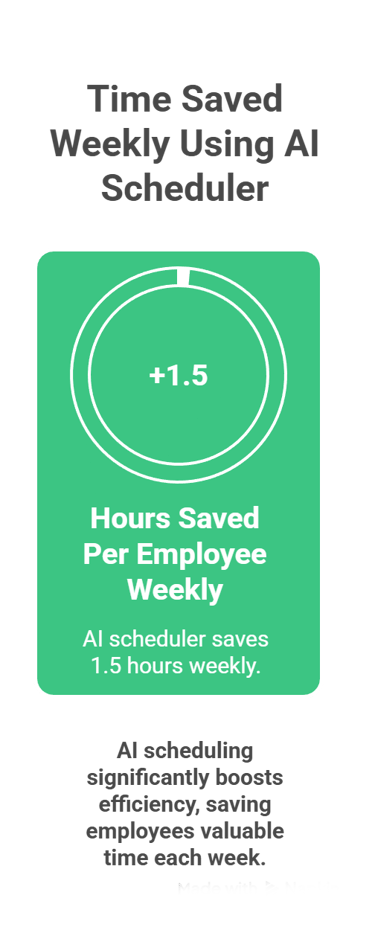
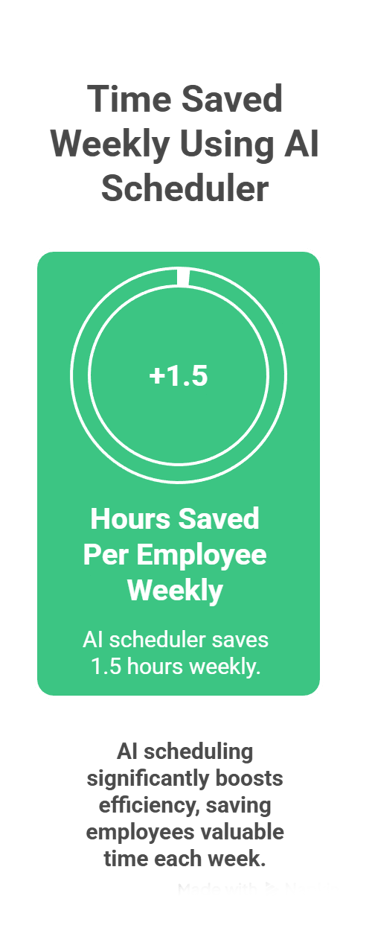
Time Savings
AI scheduling tools dramatically cut the manual labor of arranging meetings. For example:
By eliminating repetitive administrative work, teams gain uninterrupted time for strategic planning, execution, and creativity.
Better Integration and Predictive Features
Modern AI schedulers integrate with tools like calendars, email clients, and communication platforms. They use machine learning to:
Predict best meeting times based on past preferences
Suggest optimal attendance lists
Adjust scheduling logic dynamically as team priorities evolve
These systems do more than automate tasks—they help teams work smarter.
Measurable Benefits for Teams
Implementing an AI‑Powered Smart Scheduler provides tangible outcomes.
Increased Productivity
AI scheduling contributes to productivity gains in multiple ways:
Teams using AI tools save up to 20‑40% more time on scheduling tasks.
Time wasted on emails and coordination drops significantly with automated reminders and updates.
With scheduling conflicts dramatically reduced, actual work time increases.
These effects combine to give teams more hours dedicated to focused work and collaboration.
Reduced No‑Shows and Higher Engagement
Automated reminders and conflict‑aware scheduling tactics help cut no‑shows and cancellations. Reports show that AI scheduling systems can reduce no‑show rates by up to 30–50%.
When meetings start as planned and with the right participants, teams stay aligned and achieve goals faster.
Enhanced Employee Satisfaction
By freeing professionals from repetitive scheduling work, AI tools improve work experience:
More predictable calendars
Reduced scheduling stress
Better work‑life balance
In fact, 75% of employees say automated scheduling tools would improve productivity and work‑life balance.
Choosing and Implementing the Right AI Scheduler
Selecting an AI scheduling tool depends on your team’s needs and existing tech stack.
What to Look For
Integration capabilities: Does it connect with the calendars and tools you already use?
Customization: Can it reflect team priorities and policies?
Analytics and reporting: Does it provide insights into scheduling patterns?
Adoption Best Practices
Train teams on how the AI scheduler works and its benefits.
Start with a pilot group to iron out workflows.
Measure results over time to refine usage.
AI scheduling tools work best when they are part of a broader productivity and collaboration strategy.
Common Misconceptions About AI Scheduling
AI scheduling does not replace human judgment. Instead, it handles repetitive coordination so people can focus on decisions that require context and expertise.
Myth: AI Removes Human Control
AI scheduling improves the process while keeping humans in control of core decisions. It accelerates rather than replaces strategic choices.
Myth: All AI Schedulers Are the Same
Effectiveness varies by platform and use case. Some tools focus on simple calendar syncing, while others use advanced machine learning to optimize across complex constraints.
Myth: AI Raises Security Risks
Reputable AI schedulers follow strong data protection practices and integrate with secure enterprise systems, maintaining compliance and privacy.
How Exology Helps
We design and build AI-powered smart schedulers tailored to your business needs and context, analyzing your team’s workflows, priorities, and calendar patterns to ensure maximum efficiency.
Our solution adapts to your specific business rules and constraints, such as meeting hierarchies, time zone differences, and recurring tasks, so the AI scheduler reflects the way your team actually works.
The scheduler learns from historical scheduling patterns, optimizing future meeting times, reducing conflicts, and saving significant hours for your employees.
It integrates seamlessly with your existing calendars and collaboration tools, providing a single source of truth for all scheduling activities.
Exology’s tailored approach ensures that your AI scheduler not only automates meetings but also aligns with your business objectives, helping your team stay focused on strategic tasks and productivity.
Read More
Contact us
Whether you have a request, a query, or want to work with us, use the form below to get in touch with our team.