

How to Build a Data Driven Culture in 2026
Learn how to build a data driven culture in 2026 with practical steps, leadership actions, and data foundations that drive smarter decisions. learn also how exology helps
DATA-DRIVEN CULTURE
Key Points
A data driven culture in 2026 means decisions at all levels are guided by reliable, accessible data
Many organizations struggle due to data silos, low data literacy, weak leadership example, and overfocus on tools
Leadership behavior is critical, leaders must visibly use data and set clear expectations for data based decisions
Core pillars include accessible and governed data, shared metrics, accountability, and data literacy for all roles
Business Intelligence enables real time visibility, self service analysis, and consistent data definitions across teams
AI and automation accelerate insights through data preparation, prediction, and decision support when paired with training
Actionable takeaway: Start by aligning leadership on shared KPIs, centralize key data in accessible dashboards, and build basic data literacy across teams to embed data into daily decisions
Data is everywhere today. Companies collect massive volumes of information from customers, operations, finance, and digital channels. Yet only a fraction of organizations actually use that data to shape decisions. Building a data driven culture means closing the gap between data availability and meaningful action. It requires more than tools and reports. It requires leadership, behavior change, and new ways of working across the entire business.
In this post you will learn why data driven cultures matter in 2026, the challenges companies face, and actionable steps to embed data into everyday business decisions.
What Does a Data Driven Culture Mean in 2026?
A data driven culture is a workplace where decisions at every level are backed by reliable data insights rather than gut feelings or assumptions. It goes beyond dashboards and reports. In 2026, a data driven culture means:
Accessible data for all roles so insights support daily work, not just monthly reviews.
Shared understanding of metrics and business definitions across departments.
Leadership using data visibly in strategic decisions to model behavior for the organization.
Why Do Companies Struggle to Build a Data Driven Culture?
Despite widespread recognition of the value of data, many companies still struggle with cultural adoption.
Data is Silos and Hard to Access
Lack of Data Skills and Literacy
Leadership Not Modeling Data Usage
Too Much Focus on Tools, Not Behavior
What Are the Core Pillars of a Data Driven Culture?
Here are the foundational elements that make data-driven transformation possible:
Leadership Vision and Example
Leaders must communicate a clear data vision and demonstrate it by making strategic choices based on evidence. Their actions set behavioral norms across the organization.
Data Accessibility and Governance
Data must be accessible, trustworthy, and governed so teams can confidently use it. Establishing data standards and a single source of truth is essential.
Data Literacy for All
Shared Metrics and Accountability
How Leaders Enable Data Driven Decision Making
Leaders play a central role in shaping data culture by setting expectations and investing in capabilities.
Set Expectations Tied to Decision Making
Make it clear that decisions should reference data insights, not opinions. Include data usage in performance reviews and planning discussions.
Align KPIs Across Teams
Encourage Data Conversations
Create forums where teams discuss data findings openly, ask questions, and analyze patterns collaboratively. This builds transparency and trust.
What Role Does Business Intelligence Play?
Business Intelligence tools are the engines that turn raw data into usable insights.
Shared Visibility with Real-Time Dashboards
Reducing Reporting Friction
Standardizing Data Across Departments
How Teams Use Data in Daily Work
Embedding data into routine tasks turns insights into action.
Integrate Data into Workflows
Make key dashboards part of daily tools, like CRM, project management, or customer support systems, so teams see insights where they work.
Regular Review Cycles
Design weekly or monthly routines where teams review performance indicators and align on actions.
Promote Questions That Lead to Insights
Encourage employees to think like analysts by asking what patterns data shows and what actions follow.
How AI and Automation Support a Data Driven Culture
In 2026, AI tools increasingly help organizations get value from data faster.
Automate Data Preparation
AI can clean and prepare data automatically, which reduces manual work and speeds insights.
Surface Predictive Insights
Enhance Decision Support
AI adoption also requires training and change management so people trust and understand the outputs.
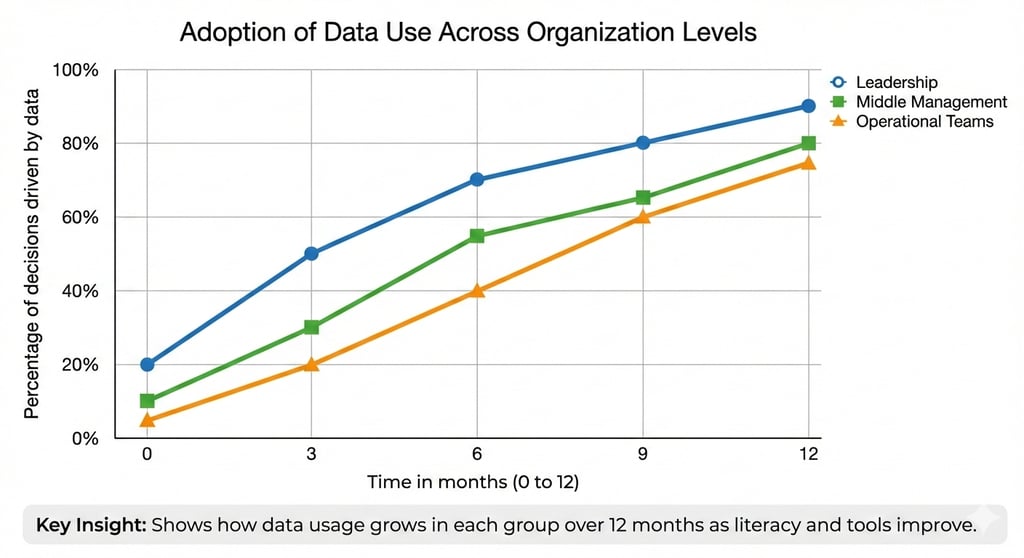
How Long Does It Take to Build a Data Driven Culture?
Cultural transformation is incremental:
Short term wins include leadership endorsement, initial dashboards, and data literacy sessions.
Mid term progress includes standardized metrics and embedded workflows.
Long term success is when data usage becomes habitual across departments.
Commitment across leadership and teams is key.
What Does a Successful Data Driven Culture Look Like in Practice?
Organizations with mature data cultures share these traits:
Teams base decisions on data patterns, not opinions.
Same definitions of performance metrics across departments.
Faster alignment in meetings due to shared visibility into data.
Continuous learning and improvement cycles rooted in evidence.
How Exology Helps
Provide fully customized Business Intelligence dashboards that centralize data and support better decisions for teams in Egypt, across MENA, and internationally.
Offer BIaaS to ensure ongoing access, updates, and support that sustain data driven practices over time.
Deliver data analytics, visualization, and training so teams at all levels can confidently use data.
Implement AI and automation solutions that reduce manual reporting and accelerate insight delivery.
Helped over 150 businesses transform their data into real decisions across different industries.
Read More
Contact us
Whether you have a request, a query, or want to work with us, use the form below to get in touch with our team.