
10 Essential Healthcare KPIs for Better Patient Outcomes in 2026
Master the top 10 Healthcare KPIs for 2026. Learn how data-driven Business Intelligence solutions improve patient safety and hospital efficiency worldwide.
BUSINESS APPLICATIONSBUSINESS INTELLIGENCE
Key Points
Modern hospitals must track real-time KPIs to transition from reactive to proactive patient care.
Clinical metrics like readmission and infection rates directly impact patient safety and survival.
Operational efficiency metrics, such as bed turnover, are essential for reducing dangerous emergency room wait times.
Administrative KPIs like claim denial rates ensure the financial health required to invest in new medical technology.
Manual reporting is too slow for 2026; automated Business Intelligence solutions provide a single source of truth.
AI-driven analytics can now predict patient health risks before discharge and significantly reduce staff paperwork.
Actionable takeaway: Select your top three performance bottlenecks and implement a visual BI dashboard to track them in real-time.
Healthcare in 2026 is a world of rapid changes. Hospitals are now complex data centers that must balance patient care with technical efficiency. To succeed, leaders must move past simple observation. They need to use precise metrics to guide every decision. Tracking the right data is the only way to ensure safety and growth in a modern medical setting.
What are the top 10 Healthcare KPIs for 2026?
1. 30-Day Readmission Rate
This metric tracks the percentage of patients who return to the hospital within 30 days of discharge. A high rate often suggests gaps in the initial treatment plan or poor follow-up care. Nationally, all-payer readmission rates have historically hovered around 13.9%, making this a critical benchmark for quality.
2. Average Length of Stay (ALOS)
This tracks the mean duration of a patient's hospital visit. Reducing ALOS without compromising recovery helps hospitals manage bed capacity and lower costs. In late 2025, the average hospital stay in some regions was measured at approximately 4.96 days.
3. Patient Satisfaction Score (HCAHPS)
This metric reflects the patient's perspective on their experience. It covers communication with doctors and the responsiveness of staff. Trust in healthcare systems dropped significantly in recent years, making patient experience a top priority for 72% of executives.
4. Bed Turnover Rate
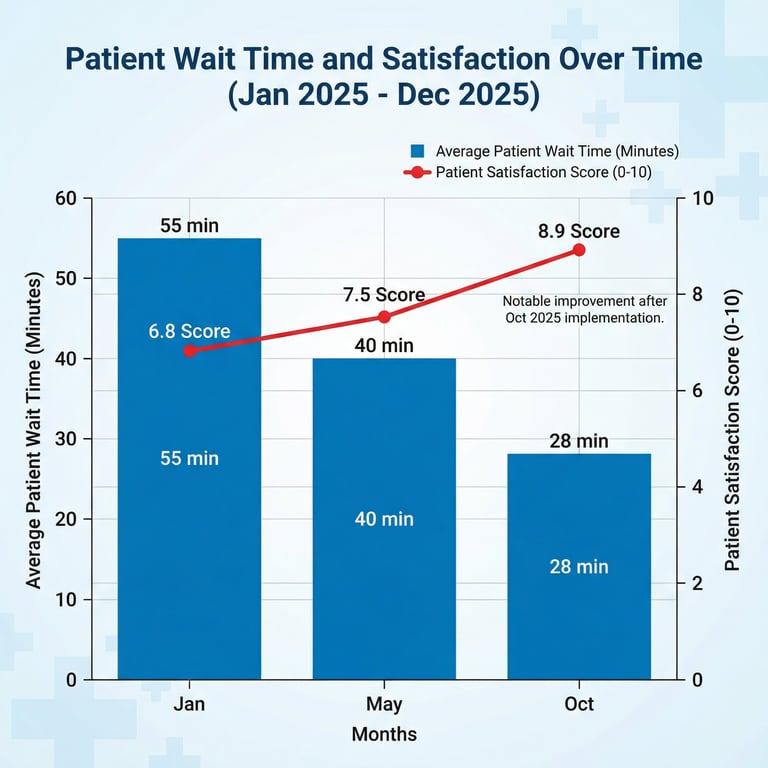
This shows how quickly hospital beds are prepared for new patients. High turnover is critical for reducing wait times in emergency departments. It ensures that the facility can handle a high volume of patients without creating dangerous bottlenecks in hallways.
5. Hospital-Acquired Infection (HAI) Rate
This monitors infections that patients contract during their stay. Keeping this number low is a primary indicator of safety and hygiene standards. A low HAI rate proves that the hospital follows strict clinical protocols to protect vulnerable individuals.
6. Medication Error Rate
This tracks errors in prescribing or administering medication. Modern hospitals use this data to identify where automation can prevent human mistakes. Reducing these errors is vital for preventing adverse drug events that can lead to longer stays or permanent harm.
7. Cost per Patient Stay
This measures the total financial resources used for one patient. It helps management balance the hospital budget while maintaining high-quality medical supplies. Financial health is essential because it allows the hospital to invest in the latest medical technologies.
8. Staff Turnover Rate
This tracks how many healthcare workers leave the organization. High turnover can lead to lower care quality and increased pressure on remaining staff. In 2026, retaining skilled nurses and doctors is a major strategic challenge for every healthcare leader.
9. Emergency Room Wait Times
This measures the time from arrival to seeing a provider. Minimizing wait times is essential for patient safety during acute medical crises. Long wait times are often a sign of deeper operational issues within the hospital's patient flow system.
10. Claim Denial Rate
This administrative metric tracks the percentage of insurance claims rejected by payers. A high denial rate can lead to financial stress. AI-assisted documentation is now being used to achieve efficiency gains of up to 40% in processing these claims.
Why should hospitals prioritize these metrics now?
How does data improve patient safety?
Data provides a clear map of what is happening inside a hospital. Without Healthcare KPIs, clinicians are forced to rely on intuition alone. In 2026, we know that intuition is not enough to prevent complex errors. Data allows teams to spot trends that the human eye might miss. For example, a dashboard might show that a specific wing has a rising infection rate. This allows management to step in before a major outbreak occurs.
Safety is also about transparency. When staff can see their performance metrics, they feel more responsible for the outcomes. Data creates a culture where everyone is working toward a common goal. This shift in culture is the foundation of a modern, safe hospital. By using real-time insights, hospitals can move from fixing mistakes to preventing them entirely.
What is the financial impact of poor tracking?
The financial stakes in healthcare have never been higher. Estimates show that global healthcare costs are rising at a rate of 5% to 7% annually. If a hospital does not track its costs, it will quickly lose its ability to provide care. Poor tracking leads to wasted resources and expensive administrative errors.
For instance, a high claim denial rate means the hospital is working for free. It spends money on care but fails to collect payment due to paperwork errors. This creates a cycle of debt that limits the hospital's growth. By tracking the right financial KPIs, hospitals can find hidden savings. These savings can then be used to hire more staff or buy better equipment. Efficiency is the key to financial survival in 2026.
How does Business Intelligence change hospital management?
Why are manual reports no longer enough?
The days of using paper forms and basic spreadsheets are over. Manual reporting is slow and full of errors. By the time a report is finished, the information is already out of date. Hospitals generate millions of data points every day. A human being cannot process this amount of information fast enough to make good decisions.
Business Intelligence solutions automate the collection of data. They pull information from the pharmacy, the front desk, and the surgical rooms into one place. This saves thousands of hours that staff would otherwise spend on paperwork. Automated reports are also much more accurate. They provide a clear, unbiased view of the hospital's performance. In a field where lives are on the line, accuracy is not optional.
What makes a great healthcare dashboard?
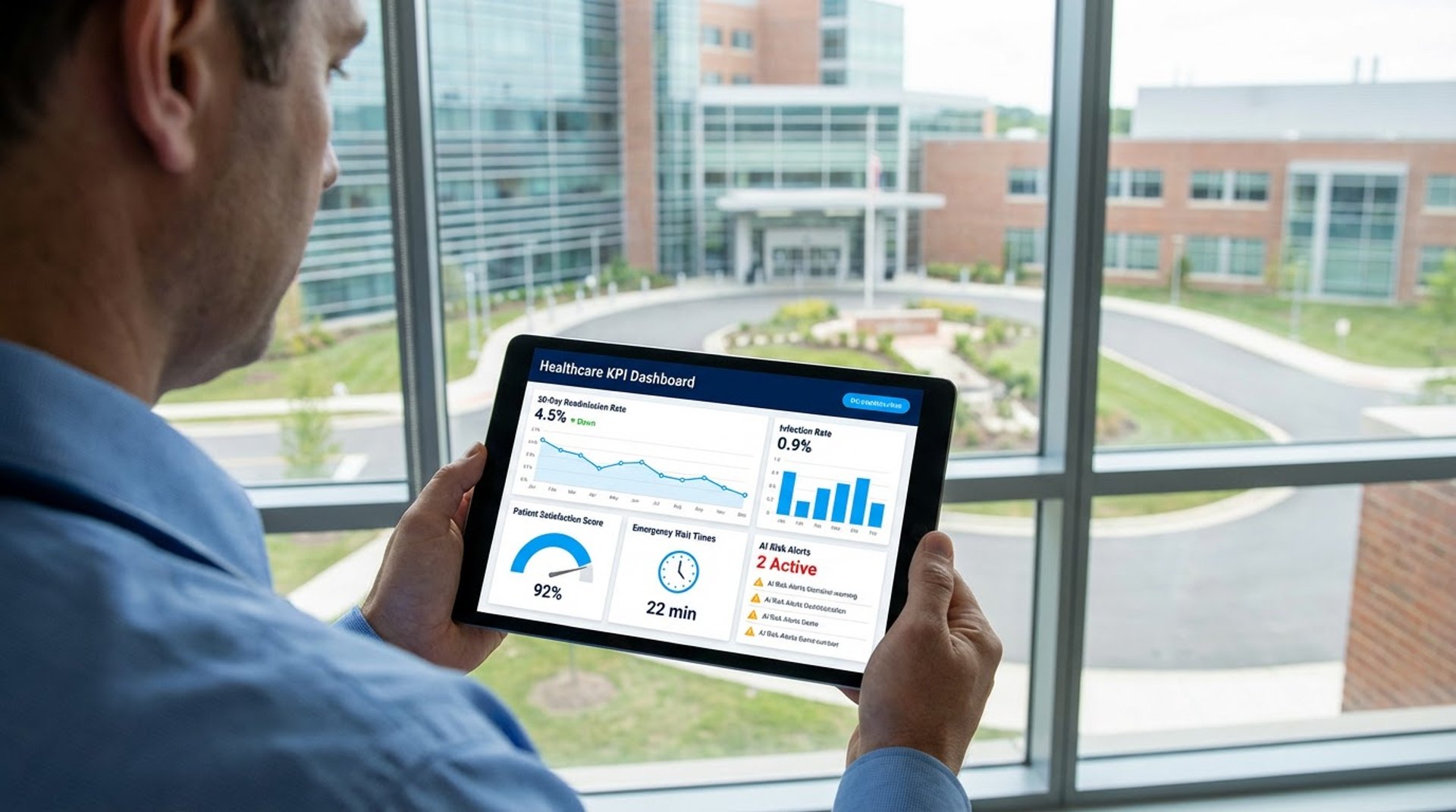
A great dashboard is simple and easy to understand. It should not be a wall of confusing numbers. Instead, it should use visuals like charts and color-coded alerts. A doctor should be able to look at a screen and know within seconds if their department is hitting its targets.
Accessibility is also important. The best dashboards are available on tablets and phones. This allows managers to check on the hospital even when they are not at their desks. A good dashboard also allows you to "drill down" into the data. If the readmission rate is high, you should be able to click on it to see which specific patient groups are affected. This level of detail turns data into a tool for action.
What role does AI play in healthcare analytics?
Can AI predict patient risks before discharge?
AI is the biggest breakthrough in healthcare since the X-ray. It does more than just track the past. It predicts the future. New AI models can scan a patient's chart and predict the risk of sepsis or heart failure hours before symptoms appear. By 2026, the global AI in healthcare market is projected to reach over $56 billion.
These predictive KPIs are changing how doctors work. Instead of waiting for a patient to get worse, they can start treatment early. This leads to much better patient outcomes and shorter hospital stays. AI also helps with discharge planning. It can identify which patients are likely to return to the hospital within 30 days. This allows the hospital to provide extra support to those who need it most.
How does automation reduce administrative burdens?
Doctors and nurses spend too much time on paperwork. This leads to burnout and a lack of focus on patients. Automation solves this by handling the boring tasks. AI agents can now manage scheduling, billing, and even some clinical notes. Research shows that AI implementation can reduce diagnostic time by up to 90% in certain cases.
When the administrative load is lighter, the staff is happier. Happy staff provide better care. Automation also reduces the risk of human error in billing and documentation. This keeps the hospital running smoothly and ensures that all records are accurate. In 2026, automation is the secret to a productive and sustainable healthcare workforce.
How Exology Helps
Exology turns complex healthcare information into clear, decisive action. We have a deep history of delivering high-impact Business Intelligence solutions for healthcare corporations across 20+ countries. We understand that your data is more than just numbers. It is the key to better lives and a stronger business.
We bridge the gap between technology and medical care by providing tools that actually work for your team. Here is how our expertise helps you excel:
Custom BI Dashboards: We build tailored dashboards that track all 10 Healthcare KPIs in real-time. We have already made over 1,340 visualizations to help our clients see their data clearly.
Saving Time and Money: Our solutions are designed for immediate impact. Exology has been able to save a client $130k in a single day by fixing critical data errors. In 2025, we saved our clients over 5,000+ hours of manual work.
Advanced AI Integration: We don’t just offer basic reports. We deploy Custom AI Agents that handle everything from risk prediction to administrative automation.
Expert Consulting: With over 150 projects delivered worldwide, our team of professional consultants knows how to modernize your hospital. We have provided data analysis services to over 50+ companies in key industries.
Massive Data Processing: We are built for scale. In 2025, we processed over 10M+ data rows, ensuring that even the largest medical groups have accurate and timely insights.
Ongoing Support (BIaaS): We offer subscription-based support to keep your dashboards updated. This ensures your leadership team always has access to the most recent metrics without any technical hassle.
Exology works with companies in Egypt, across the MENA region, and internationally to build a data-driven future. We provide the technical backbone so you can focus on what matters most: your patients.
Read More
Contact us
Whether you have a request, a query, or want to work with us, use the form below to get in touch with our team.