
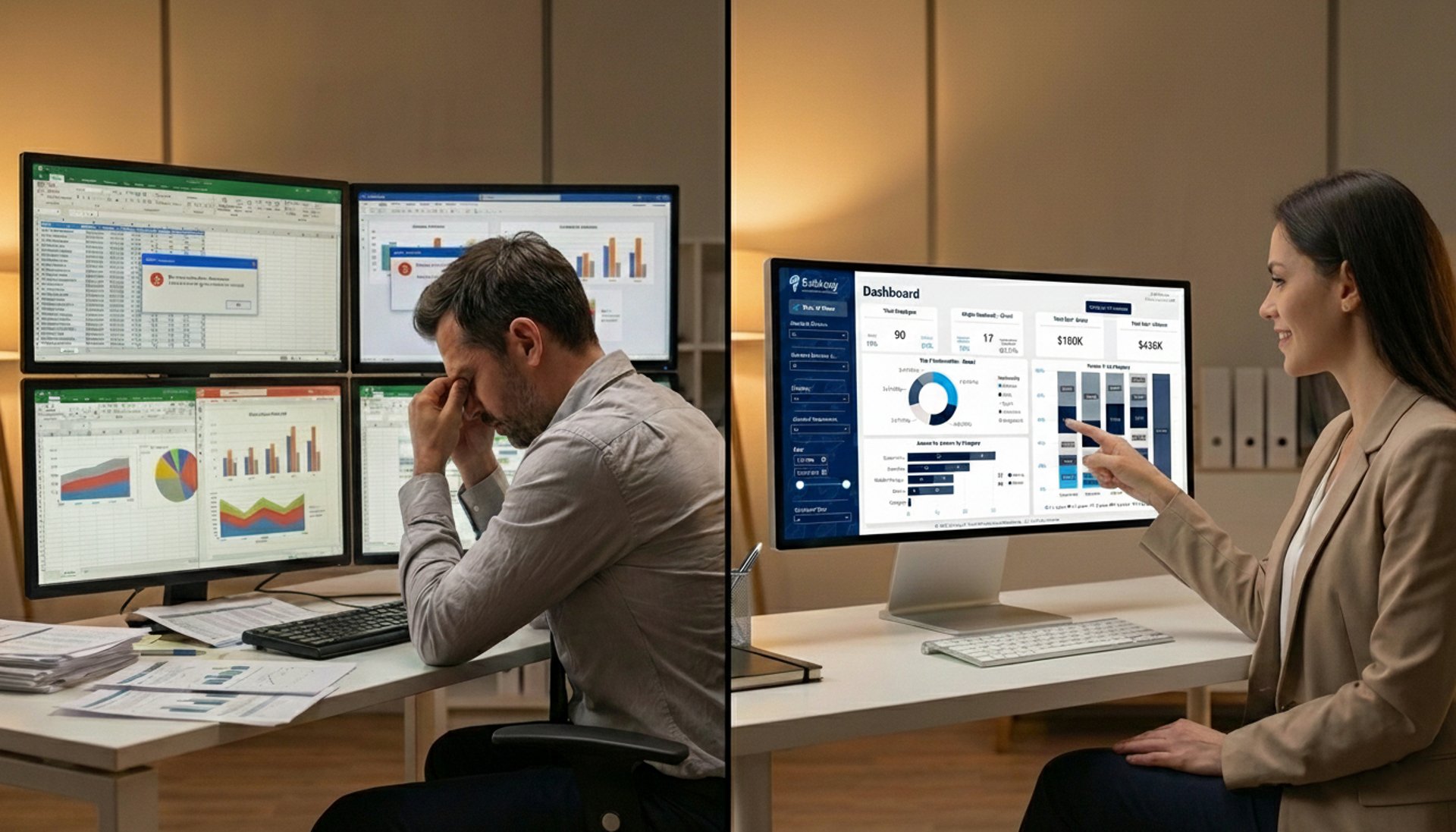
The Hidden Cost of Data Living in Multiple Systems
Learn the real cost of data silos, how fragmented systems erode decisions and growth, and strategies to unify data for better performance and insights. learn how exology can help centralizing all of your data
DATA-DRIVEN CULTURE
Key Points
Data silos occur when data lives in disconnected systems, preventing a unified business view
Data fragmentation leads to revenue loss, higher costs, and slower reporting cycles
Siloed data reduces productivity through manual reconciliation, duplication, and errors
Poor data integration weakens decision making and hides trends and growth opportunities
Legacy systems, weak data governance, culture, and rapid growth are main causes of silos
Breaking down silos enables integrated analytics, faster decisions, collaboration, and innovation
Actionable takeaway: Conduct a data audit and centralize key systems into a single analytics platform to create one trusted source of truth
What Are Data Silos and Why They Matter
Data silos are isolated collections of data that live in separate systems and cannot be easily shared across teams. These can include CRM databases, finance systems, operations tools, and even spreadsheets that do not communicate with each other. The result is that different parts of an organization are working with disconnected datasets rather than a single, unified view.
When data is fragmented across multiple systems, leaders lose the ability to see the full picture. Departments may make decisions with partial or outdated information, and efforts to reconcile data manually slow down the business.
The Hidden Costs of Data Silos
Financial Impact
Data silos erode revenue and increase costs in ways that are often invisible until they become critical.
According to IDC research, companies can lose 20–30 percent of revenue annually due to inefficiencies caused by data silos. For a mid‑sized business with $10 million in revenue, that could mean $2–$3 million lost each year.
Fragmented data also slows reporting and decision cycles. Analysts frequently spend up to 30 percent of their time manually merging data from disparate sources instead of generating insights. This kind of inefficiency translates directly into labor costs and delayed actions.
These hidden financial drains add up over time and diminish profitability.
Operational Impact
When teams cannot access consistent and timely data:
Workflows become inefficient as employees spend hours reconciling numbers.
Data duplication increases storage and administrative costs.
Manual processes introduce errors that can mislead operational planning.
These operational frictions slow growth and frustrate staff, reducing productivity.
Decision‑Making and Strategic Impact
When data is siloed:
A HubSpot survey from 2025 found that 34 percent of companies reported revenue loss due to fragmented and siloed data. The same research showed only 31 percent of organizations believe their data is ready for AI use, and just 9 percent trust their data enough for accurate reporting.
Why Data Fragmentation Happens
Understanding why data silos form helps in addressing them.
1. Legacy Systems and Independent Tools
When departments adopt different tools that do not integrate natively, data becomes trapped in isolated systems.
2. Lack of Data Governance
Without clear policies for data sharing and standard definitions, teams create their own versions of data structures, leading to inconsistency.
3. Cultural Barriers
Some teams view their data as proprietary, creating barriers to sharing and collaboration.
4. Growth and Mergers
Rapid expansion, mergers, and acquisitions often bring in new datasets that are poorly integrated with existing systems.
Benefits of Breaking Down Data Silos
Unified Analytics and Reporting
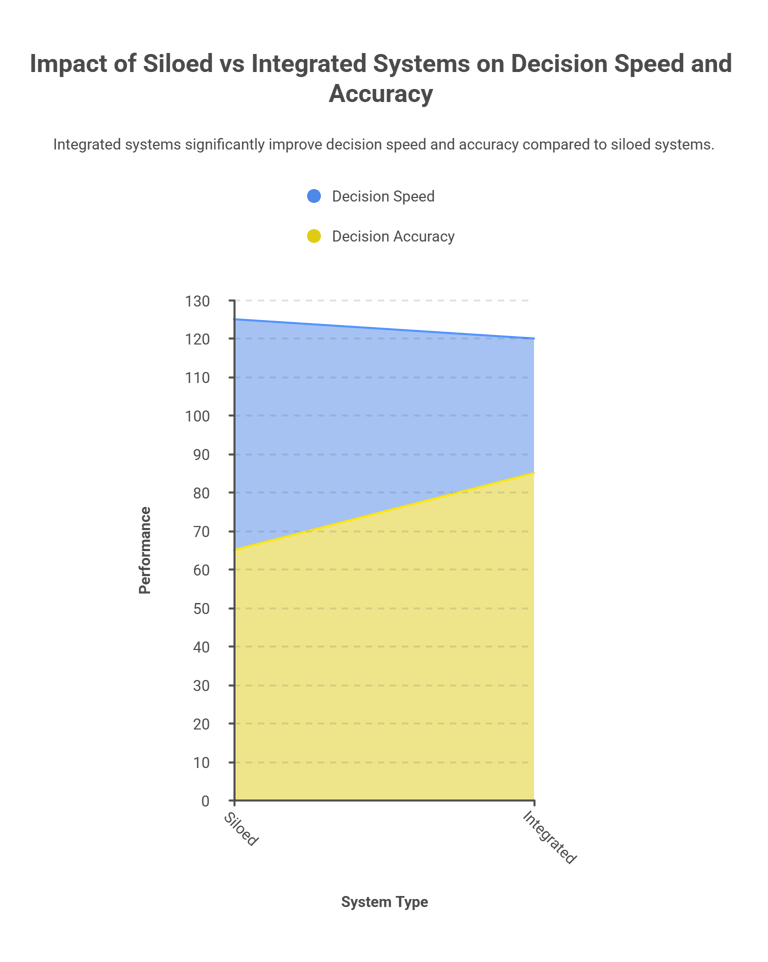
When data is consolidated into a unified system or analytics platform, organizations can produce faster, more accurate insights. Integrated analytics improves decision quality and reduces time spent reconciling data.
Faster, Data‑Driven Decisions
Removing data silos enables leaders to act quickly because they have access to trusted, complete information. Decisions based on real‑time data often outperform those built on stale or incomplete datasets.
Better Collaboration
A shared source of truth encourages cross‑department collaboration and aligns teams around common goals, mitigating conflicts caused by inconsistent information.
Increased Innovation
With unified data, patterns and opportunities become more visible, enabling faster innovation and strategic planning.
How to Address Data Silos
Conduct a Data Audit
Map out where data currently resides, how it flows, and which teams use it. This audit reveals gaps and duplication that need to be addressed.
Adopt Integrated Analytics Tools
Use centralized tools such as data warehouses or lakehouses that bring data together. These systems create a single source of truth across departments.
Standardize Definitions and Governance
Implement data governance policies that define standards for data quality, access rights, and usage guidelines. This reduces inconsistency and creates a unified approach.
Train Teams on Centralized Dashboards
Provide training to ensure staff understand how to access and interpret unified reports and dashboards. A consistent approach increases trust in your data platform.
How Exology Helps
Exology helps organizations eliminate data silos by centralizing fragmented data into a single, trusted source of truth.
We have helped over 150+ companies transform fragmented data into clear, actionable decisions.
We work with organizations in Egypt, across the MENA region, and internationally.
We integrate data from multiple systems such as CRMs, ERPs, finance tools, operational platforms, and spreadsheets into unified analytics environments.
Our custom business intelligence solutions consolidate disconnected data into real time dashboards that give leaders a complete, end to end view of business performance.
Through BIaaS (Business Intelligence as a Service), we continuously maintain, optimize, and scale centralized analytics so teams always work with accurate and up to date data.
We standardize data definitions and reporting structures across departments, reducing inconsistencies and manual reconciliation.
Our data analytics and visualization services turn fragmented datasets into insights that support faster and more confident decision making.
Exology’s digital transformation consulting modernizes data infrastructure to support integrated analytics and long term growth.
We provide hands on training so teams can confidently use centralized dashboards and make consistent, data driven decisions.
By centralizing data silos and unifying analytics, Exology enables organizations to reduce inefficiencies, improve decision quality, and unlock the full value of their data.
Read More
Contact us
Whether you have a request, a query, or want to work with us, use the form below to get in touch with our team.