

How to Measure Digital Transformation ROI: A Simple Framework for Growing Companies
Learn how to measure digital transformation ROI with clear metrics, baseline setup, KPI examples, and tools that help growing companies track and improve their digital investments.
DIGITAL TRANSFORMATION
Key Points
Digital transformation ROI measures value gained versus total costs, including efficiency, productivity, and decision quality
Many companies struggle with ROI because they skip baseline data and define metrics too late
Accurate ROI starts with baseline metrics and a full view of total cost of ownership, not just software costs
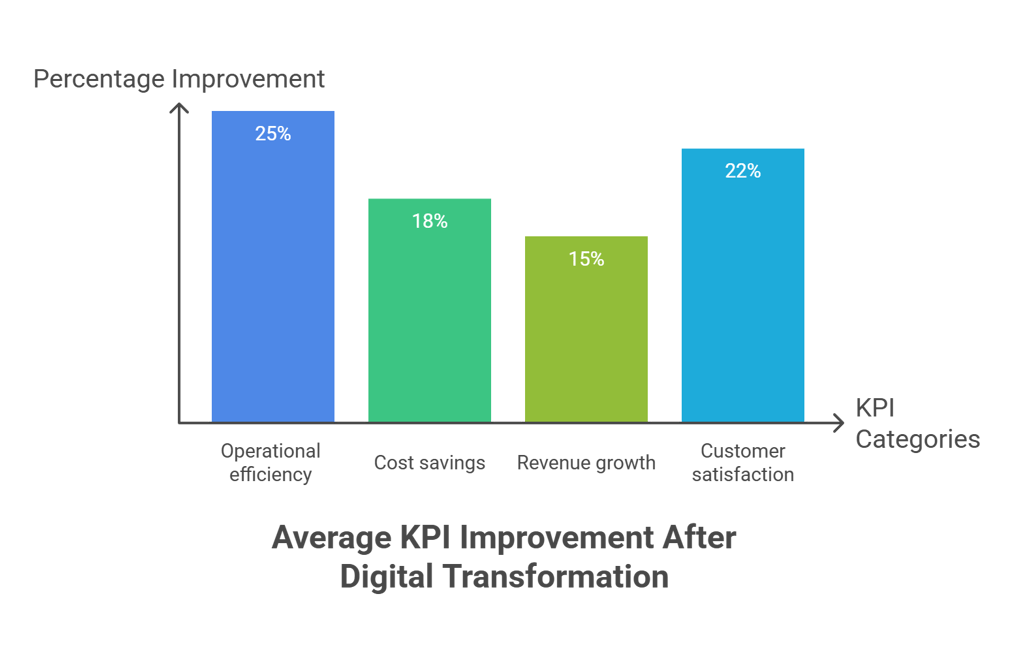
Effective digital transformation metrics combine operational, financial, customer, and employee KPIs
ROI appears in phases, with early efficiency gains in 3 to 6 months and stronger financial impact over 12 to 24 months
Dashboards, BI tools, automation tracking, ERP analytics, and AI reporting are essential for accurate ROI measurement
Actionable takeaway: define baseline metrics and clear KPIs before starting any digital transformation project and track them continuously using dashboards
Digital transformation can bring significant value to businesses of all sizes. But understanding the return on investment is critical before and after implementing digital tools and strategies. This guide explains how to measure digital transformation ROI in a clear framework that growing companies can follow in Egypt, the MENA region, and globally.
What does digital transformation ROI really mean?
Digital transformation ROI refers to the measurable benefits gained from investments in digital initiatives compared to their costs. It captures not only financial return but also improvements in efficiency, customer experience, and productivity.
Why do companies struggle to measure ROI?
Many organizations fail to measure ROI accurately because they do not collect baseline data or choose the right metrics. ROI measurement must be defined before projects begin to track performance accurately over time.
What counts as value in digital transformation?
Value comes in multiple forms, including:
Faster reporting and insights that reduce decision time.
Lower operational costs through automation.
Better decision making fueled by data.
Higher productivity from process improvements.
These outcomes may not all be financial, but they contribute to lasting business impact.
What should companies measure before starting a digital transformation project?
Before investing in digital initiatives, companies should collect baseline data and understand total costs.
What baseline data should be collected?
Baseline data is the current state of operations, such as:
Time spent on manual tasks
Error rates in processes
Customer response times
Revenue and cost figures before digital improvements
Without baseline data, comparing “before and after” results becomes unreliable.
Which costs must be included to calculate true ROI?
Costs are not just software licenses. Include:
Technology costs for tools and platforms
Integration costs to connect systems
Training for teams
Change management efforts
Support and maintenance over time
A complete view of Total Cost of Ownership (TCO) ensures ROI is calculated accurately.
What are the key KPIs for measuring digital transformation ROI?
Key performance indicators (KPIs) should align with business goals and be easy to measure and track.
Operational KPIs
Operational indicators reflect internal improvements:
Process cycle time reductions
Manual workload or hours saved
Error or defect rates
Time to market for new products or services
These metrics show how digital tools improve efficiency.
Financial KPIs
Financial outcomes show direct economic value:
Cost savings from process automation
Revenue growth attributable to digital channels
Return on technology investments
These metrics measure hard financial impact.
Customer and employee KPIs
Success also depends on people:
Customer satisfaction scores, such as NPS or CSAT
Customer retention improvement
Tool adoption rates among employees
Employee productivity scores
These indicators reveal whether digital initiatives deliver engagement and satisfaction.
How long does it take to see measurable ROI?
ROI timelines vary based on the type of project and company readiness.
Short term results companies can expect
Within the first 3 to 6 months, teams may see:
Faster reporting and analytics
Reduced time on repetitive tasks
Lower error rates from automation
These gains are early indicators of ROI.
Long term results and compounding benefits
After 12 to 24 months, benefits typically grow as teams adopt tools fully and processes stabilize. Cost savings become clearer and digital channels may start contributing revenue growth.
What realistic timelines look like for Egypt and MENA companies
Companies in Egypt and the MENA region often balance digital maturity with regulatory and market conditions. Establishing a measurement framework early accelerates ROI clarity in regional contexts where digital transformation is rapidly increasing.
What tools help companies accurately measure digital transformation ROI?
The right tools provide real-time insights and automated tracking.
Dashboards and BI systems
Business intelligence dashboards centralize metrics and show trends over time. They help teams understand ROI drivers clearly.
Automation tracking tools
Automation platforms log time saved and process efficiencies that feed directly into ROI calculations.
ERP analytics
Enterprise resource planning systems track enterprise-wide operational data, enabling ROI measurement across business functions.
AI driven reporting
AI-powered analytics reveal patterns, predict trends, and help forecast future ROI based on current performance.
Using data analytics tools ensures ROI calculations are accurate and actionable.
What common mistakes reduce ROI and how can companies avoid them?
Avoid these pitfalls to protect ROI.
Not having clear KPIs
Without predefined, specific KPIs, companies cannot measure outcomes effectively.
Poor data quality
Inaccurate or incomplete data distorts ROI calculations.
Low adoption by teams
Tools only deliver value when people use them. Focus on change management to drive adoption.
Not tracking results continuously
ROI is not a one-time metric. Companies must track results continuously and adjust strategies as needed.
How can companies in Egypt and MENA maximize ROI from digital transformation?
Digital transformation ROI grows when companies focus on high-impact areas.
Start with high impact processes
Identify repetitive tasks or critical pain points where automation or digitization has immediate benefits.
Use dashboards for real time visibility
Dashboards provide live insights into KPIs that matter most.
Automate repetitive tasks first
Automation reduces manual effort and reveals quick wins.
Build data driven habits inside teams
Encourage teams to make decisions based on data rather than guesswork, improving performance over time.
How Exology Helps
We define baseline metrics and KPIs tailored to your business to ensure you can measure ROI effectively.
We build custom business intelligence dashboards that show ROI impact in real time.
We implement automation and AI solutions that drive measurable improvements in productivity and cost savings.
We help companies in Egypt, across the MENA region, and internationally adopt data-driven measurement practices that improve decision making.
We support ongoing measurement and refinement so digital transformation continues delivering value.
Read More
Contact us
Whether you have a request, a query, or want to work with us, use the form below to get in touch with our team.