

Why the Rule of 3 is the Best Way to Start Your Business Automation Journey
Use the Rule of 3 to identify tasks for business automation. Learn how to boost productivity, reduce errors, and scale your business with automated workflows.
AI & AUTOMATION
Key Points
Business automation is essential for companies to manage growing data and remain competitive in a fast-paced global market.
The global market for business process automation is expected to reach $18.83 billion by 2026 as more firms move away from manual work.
Automating repetitive tasks reduces human error and allows employees to focus on high-value creative work.
Industries that embrace automation see nearly four times the productivity growth compared to those that rely on manual processes.
The Rule of 3 helps managers identify automation candidates by flagging any manual task performed three times a week or more.
Prioritizing high-volume and low-complexity tasks for automation provides the quickest return on investment and builds team confidence.
Actionable takeaway: Audit your weekly work schedule to identify every manual task you repeat three times or more, then book a consultation to automate the most time-consuming one.
The world is moving faster than ever. Every day, businesses face new challenges. They need to do more with less. They need to work smarter, not just harder. This is why we have entered the era of automation. It is no longer just a trend for tech giants. It is a vital tool for every business that wants to grow.
One of the simplest ways to start is the Rule of 3. If you do a manual task three times a week, it is time to automate it. This rule helps you find the hidden time wasters in your day. By following this simple guide, you can unlock massive productivity and growth.
At Exology, we understand this transition perfectly. We have completed over 200 projects for more than 150 businesses. Our work spans across 20 countries and 10 key industries. These projects include everything from data analysis to full digital transformations. We have seen how moving away from manual work changes a company’s future.
Why are we in the era of automation?
We live in a time where data is everywhere. Companies collect information from sales, social media, and internal logs. Handling this data by hand is impossible. According to Research and Markets, the global business process automation market is expected to grow to $18.83 billion in 2026. This growth shows that companies everywhere are choosing digital tools over manual work.
What is business process automation?
Business process automation is the use of technology to execute recurring tasks. It replaces manual effort with digital workflows. This can be as simple as an automated email or as complex as an entire supply chain system. The goal is always to make work more efficient.
Why is automation growing so fast?
There are three main reasons for this shift. First, the cost of technology has dropped. Small businesses can now use tools that were once only for big corporations. Second, there is a global push for speed. Customers expect instant answers and fast delivery. Manual processes are too slow to keep up. Third, labor markets are changing. Automation helps fill gaps when it is hard to find specialized talent.
How does modern automation differ from the past?
In the past, automation was rigid. It could only do one specific thing. Modern automation is much more flexible. It can connect different apps and move data between them. It can adapt to changes in your workflow. This makes it a powerful tool for businesses of all sizes.
What are the main benefits of automation?
Automation offers more than just speed. It changes how a business breathes. The first big benefit is the reduction of errors. Humans get tired. They get distracted. They make mistakes when typing data or sending emails. A computer does not get tired. It follows the rules perfectly every single time.
How does automation reduce human error?
Manual data entry is one of the biggest sources of mistakes. A small typo can lead to big financial losses. Automation removes the need for people to type the same data into multiple systems. It ensures that information remains accurate as it moves across your business. This builds trust in your data.
Can automation improve employee satisfaction?
Most people do not enjoy doing the same boring task every day. It drains their energy. When you automate repetitive work, your team can focus on creative tasks. They can solve complex problems and build better relationships with customers. This makes their work more meaningful. It also reduces burnout and helps you keep your best talent.
How does it help with business scaling?
Automation allows for massive scale. If your sales double tomorrow, a manual team might struggle to keep up. An automated system can handle the extra work without any extra effort. It gives your business the room it needs to grow without hitting a wall. You can expand your operations without constantly hiring new staff.
What is the ROI of automation?
Return on Investment (ROI) is the most important metric for any business leader. Automation is an investment that pays for itself quickly. In fact, many companies see a return within the first year. According to a report by PwC, productivity growth has nearly quadrupled in industries most exposed to automation. These industries saw a jump from 7% productivity growth to 27%.
How quickly can I see a return on investment?
Most businesses see a return on investment within six to twelve months. This depends on how much manual work was being done before. If your team was spending forty hours a week on manual data entry, the savings will be instant. The faster you implement automation, the sooner you start saving money.
What are the differences between hard and soft savings?
Hard savings are direct cost reductions. This includes lower labor costs and fewer expensive mistakes. Soft savings are indirect. They include things like faster response times for customers. Better customer service leads to more repeat business. Both types of savings contribute to a healthier bottom line.
How do I measure the success of an automation project?
You should track key performance indicators before and after the project. Look at the time taken to complete a task. Look at the error rate. You can also measure employee engagement. If your team is happier and your tasks are finished faster, the project is a success.
When should a business consider automation?
Knowing when to start is often the hardest part. You do not need to automate everything at once. You should look for signs that your manual processes are failing. If your team is constantly working overtime but the work is not getting done, that is a sign. If your data reports are always a week late, that is another sign.
What are the red flags of a manual process?
A major red flag is the "spreadsheet nightmare." This is when your business relies on dozens of Excel files that do not talk to each other. Another sign is when different departments have different versions of the same data. If you are spending more time checking your data than using it, you need automation.
How do I choose which task to automate first?
You should start with tasks that are high in volume but low in complexity. These are the "low hanging fruit." Automating these tasks gives you the biggest win for the least effort. This builds confidence in the technology. Once you see the benefits, you can move on to more complex workflows.
Is my business too small for automation?
No business is too small for automation. In fact, small businesses often benefit the most. Automation acts as a force multiplier. It allows a small team to perform like a much larger company. It levels the playing field and helps you compete with bigger rivals.
How does the Rule of 3 work?
The Rule of 3 is a simple mental model. It says: "If you do the same manual task three times a week, you should automate it." This rule is powerful because it focuses on frequency rather than just time. A task might only take ten minutes. However, if you do it three times a week, it is a constant interruption.
What exactly is the Rule of 3?
The rule is a trigger for decision making. It helps you stop and evaluate your habits. If you find yourself clicking the same buttons or copying the same text every few days, you have found an automation candidate. It turns a vague feeling of being "busy" into a clear plan for efficiency.
Why focus on frequency instead of time?
Interruptions are expensive. It takes the human brain about 20 minutes to fully refocus after a distraction. If you are interrupted three times a week by a manual task, you are losing more than just the time it takes to do the task. You are losing your peak mental performance. By removing frequent tasks, you protect your focus.
How does this rule prevent mental burnout?
Mental burnout often comes from "micro-stresses." These are small, annoying tasks that pile up. The Rule of 3 clears these tasks off your plate. This gives you more mental space to think about big ideas. It makes your workday feel smoother and less cluttered.
What are examples of automation in different departments?
Automation works everywhere. It is not just for the IT department. Let's look at how different teams can use it.
How does automation work in Finance?
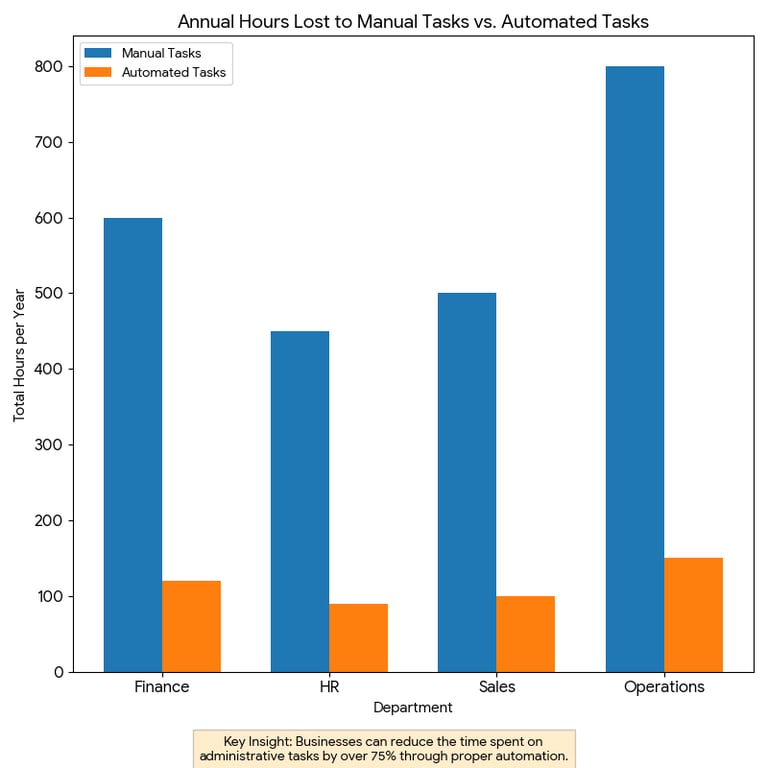
Finance teams spend hours on invoice processing. Automation can scan incoming invoices and enter the data into your system. It can also flag unusual spending. This speeds up the closing of monthly books. Instead of chasing paper, the finance team can spend time analyzing cash flow.
Can HR use automation for onboarding?
HR teams often spend hours on paperwork for new hires. Automation can handle the entire process. When a new hire is added, a workflow can send their contract and set up their email. It can also schedule their training sessions. This ensures no steps are missed.
How does Sales benefit from automated workflows?
Sales teams can use automation to manage their leads. When a potential customer fills out a form, a system can instantly send a personalized reply. It can also schedule a meeting based on the salesperson's calendar. This ensures that no lead goes cold while waiting for a response.
How is automation used in different industries?
Every industry has unique needs. Automation adapts to meet them.
What does automation look like in Retail?
In retail, inventory management is key. Automated systems can track stock levels in real-time. If a product is running low, the system can automatically place an order. This prevents lost sales. It also helps businesses keep less cash tied up in excess inventory.
How is Manufacturing using smart automation?
Manufacturing uses automation to improve safety and quality. Smart sensors on machines can predict when a part is about to fail. This is called predictive maintenance. By fixing the machine before it breaks, the factory avoids expensive downtime. Gartner predicts that 30% of enterprises will automate more than half of their network activities by 2026.
Can Healthcare providers automate patient care?
Healthcare providers use automation to manage patient records and appointments. Automated reminders can be sent via SMS to reduce no-shows. Systems can also help with insurance claims. This reduces the administrative burden on doctors. They can then spend more time with patients.
How Exology Helps
Exology knows that the transition to automation can feel overwhelming. We are here to make it simple. We help you identify the manual tasks that are slowing you down. Then, we build the custom tools you need to fix them. We work with companies in Egypt, across the MENA region, and internationally.
Our team has a proven track record of success. We don't just provide software. We provide solutions that grow with your business. Whether you are in retail, finance, or manufacturing, we have the expertise to help you scale.
Identifying Inefficiencies: we help you apply the Rule of 3 to find hidden bottlenecks in your workflow.
Custom Automation Systems: We design workflows that fit your unique business processes perfectly.
Seamless Integration: We connect your existing tools so your data flows smoothly from one department to another.
Exology has delivered over 150 projects worldwide: This global experience ensures we bring the best practices to your business.
5,000+ Hours of Manual Work Saved in 2025: Our solutions provide real, measurable results that give time back to your team.
Read More
Contact us
Whether you have a request, a query, or want to work with us, use the form below to get in touch with our team.